Travel to Bhutan: Essential Guide for Visiting the Himalayan Kingdom
Bhutan sits high in the Himalayas, fiercely guarding its culture and forests while still opening its doors to travelers from all over. It’s the only carbon-negative country on the planet and doesn’t measure success by GDP alone—Gross National Happiness comes first here. If you’re thinking about going, get ready for someplace truly different.
To visit Bhutan, you’ll need to book through a licensed tour operator, get a visa (USD 40), and pay a Sustainable Development Fee of USD 100 per night. Most people fly into Paro Airport via Bangkok, Singapore, or cities in India or Nepal. It’s not complicated once you know what to expect.
Once you’re there, you’ll hike up to ancient cliffside monasteries, join in festivals full of color and tradition, and wander through landscapes that swing from subtropical valleys to snowy peaks. Spring and autumn are the favorites for weather, but honestly, every season has its own charm.
Key Takeaways
- Visitors need a visa and must pay a USD 100 nightly Sustainable Development Fee
- Book flights to Paro Airport from hubs like Bangkok or Singapore with Drukair or Bhutan Airlines
- Spring and autumn bring the best weather and top cultural festivals
How to Travel to Bhutan: Entry, Visas, and Booking
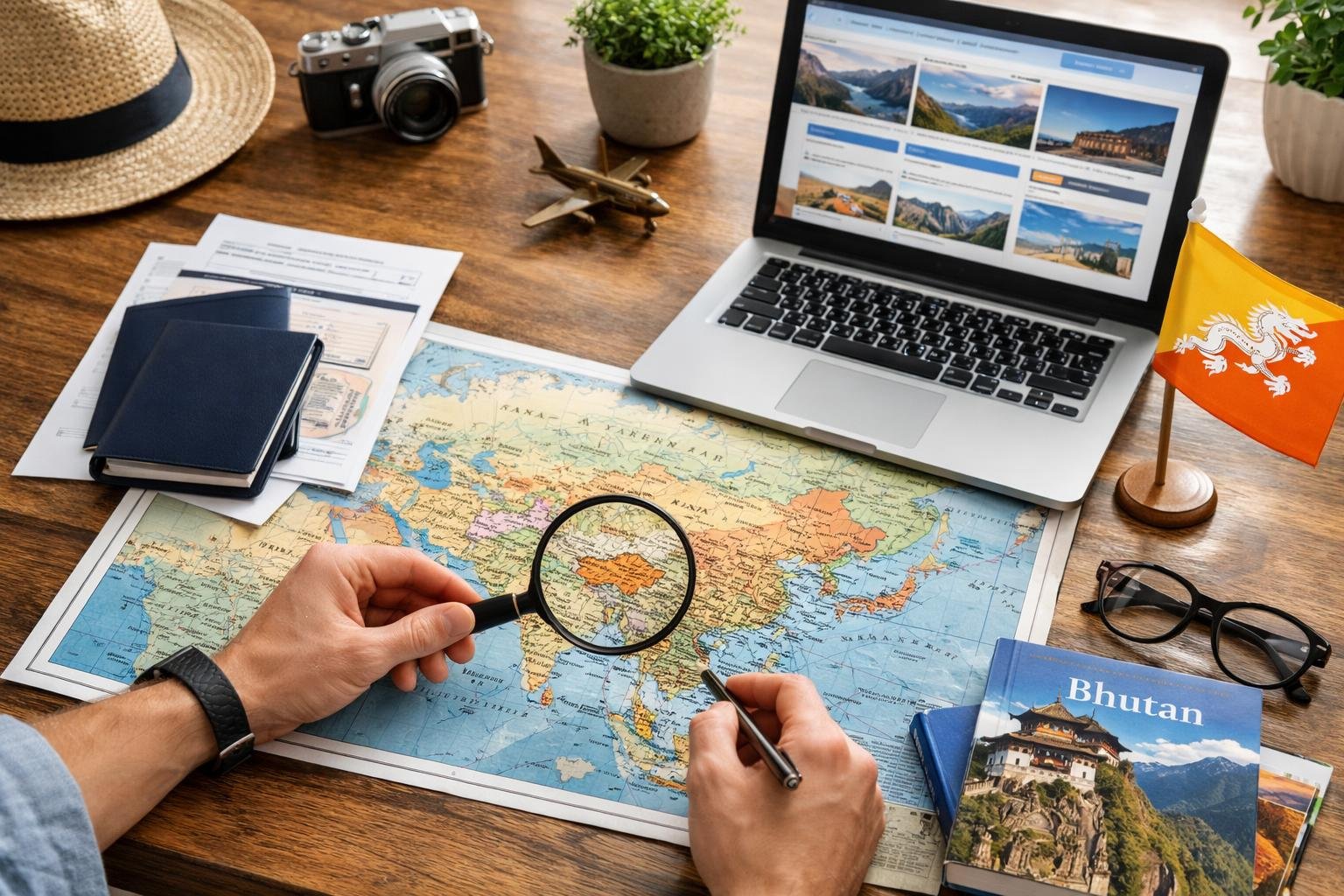
You’ll need to plan ahead—book with a licensed tour operator, get your visa approved by Bhutan’s Department of Immigration, and pay a $100 daily Sustainable Development Fee. Most travelers fly into Paro International Airport, though some nationalities can cross at land borders.
Bhutan’s Unique Tourism Policy and Sustainable Development Fee
Bhutan keeps tourism tightly controlled to protect its culture and environment. The Sustainable Development Fee (SDF) of $100 per adult per day goes straight to preservation and infrastructure projects. Kids get a discount on the SDF.
This fee is separate from your tour and visa costs. There’s no way around it—everyone pays, except citizens of India, Bangladesh, and the Maldives, who follow different rules.
Visa Requirements and Application Process
You’ll need a visa unless you’re from India, Bangladesh, or the Maldives (Indian nationals just need a permit).
To apply, submit a digital passport copy, recent photo, your travel dates, and payment info. The visa fee is $40, and you’ll pay the SDF for your whole trip up front.
Required Documents:
- Passport valid for at least six months
- Recent passport-sized photo
- Confirmed travel dates
- Payment method for international transfers
Bhutan’s Department of Immigration reviews applications in about five working days. You can apply online or let your tour operator handle it—it’s usually easier to let them do it.
You’ll also sign Bhutan’s Pledge of Friendship, promising to respect sacred places, protect nature, and help preserve Bhutanese culture.
Booking Through Licensed Bhutanese Tour Operators
You have to book your entire trip through a licensed Bhutanese tour operator—no independent travel, no piecing together your own hotels.
Your tour operator sorts out visas, hotels, transport, guides, and collects the SDF to forward to the government. They’ll build your itinerary around what you want to see and do, and they handle all the details inside the country.
Flights, Arrival at Paro International Airport, and Entry Points
Paro International Airport is Bhutan’s only international airport. It’s tucked into a narrow valley surrounded by mountains—pilots need special training just to land there.
Airlines Flying to Paro:
- Druk Air (Bhutan’s national carrier)
- Bhutan Airlines
Flights come in from Delhi, Bangkok, Kathmandu, Singapore, and a few others. Schedules shift with the seasons—more flights run during peak months (March–May, September–November).
Land crossings from India are possible at Phuentsholing and Gelephu, mostly for travelers from India, Bangladesh, or the Maldives.
At Paro, you’ll go through customs and immigration. Bring your visa clearance letter, passport, and any other required documents when you arrive.
Experiencing Bhutan: Destinations, Culture, and Planning
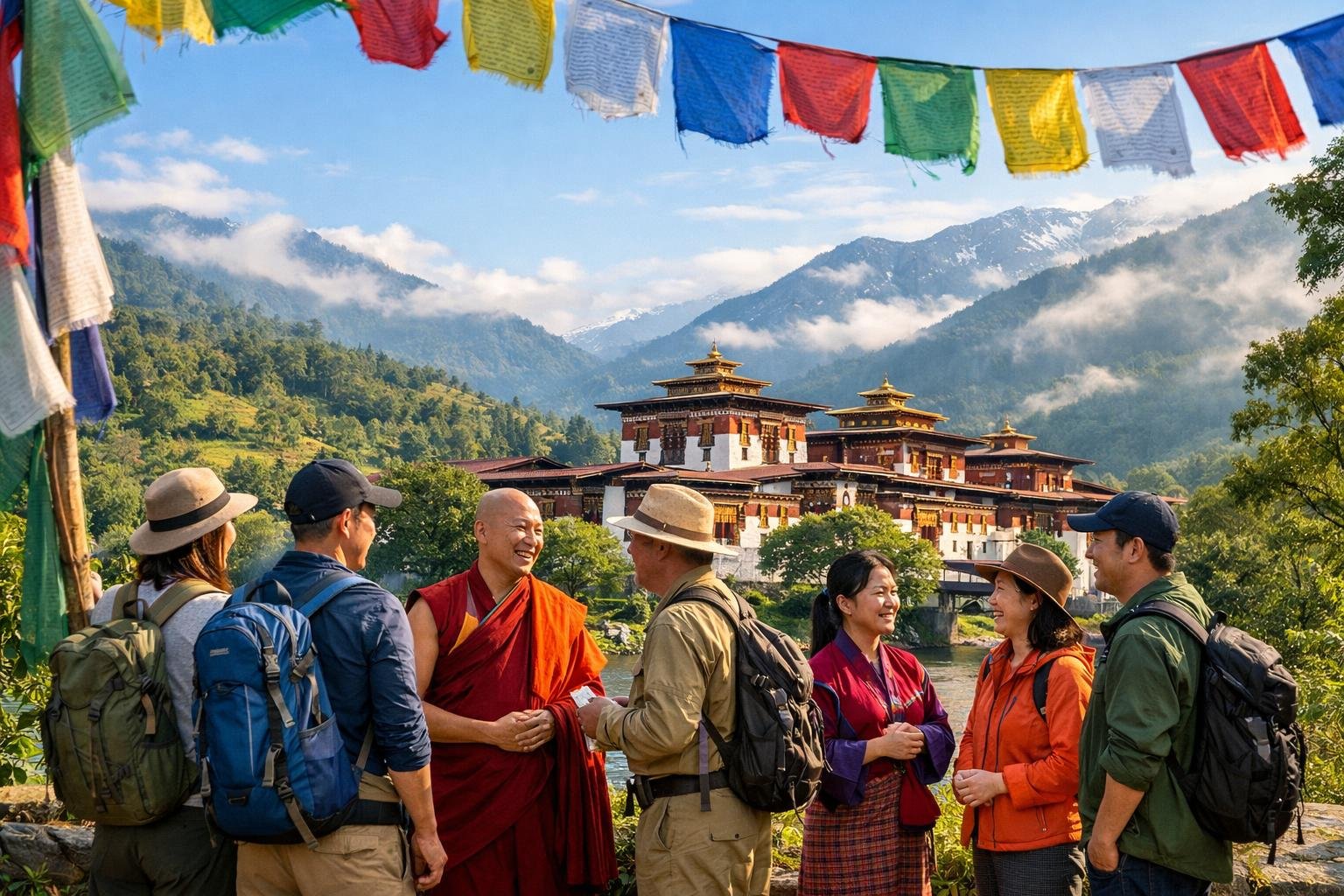
Bhutan greets you with wild valleys, centuries-old dzongs, and festivals that pulse with Buddhist tradition. Gross National Happiness isn’t just a slogan here—it shapes everything, from the way buildings look to how forests are protected.
Best Time to Visit Bhutan and Seasonal Highlights
Spring (March to May) brings rhododendrons and clear mountain views. It’s great for trekking, with valley temps around 15–20°C. The Paro Tshechu festival in April is a highlight—locals dress up and gather for mask dances at the monastery.
Autumn (September to November) is the most reliable for weather. Thimphu Tshechu happens in late September or early October, drawing big crowds. October also brings Punakha Drubchen and Jambay Lhakhang Drup in Bumthang, complete with fire blessing rituals.
Winter (December to February) is quieter, with snow on the peaks and fewer tourists. It gets cold at higher elevations, but valleys like Phobjikha fill up with black-necked cranes. Dochula Pass is stunning on crisp winter mornings.
Summer (June to August) means monsoon rains, which make everything lush but can turn trails muddy and attract leeches. If you don’t mind the weather, you’ll get lower rates and see a more everyday side of Bhutan.
Top Places to Visit: Paro, Thimphu, Punakha, and Bumthang
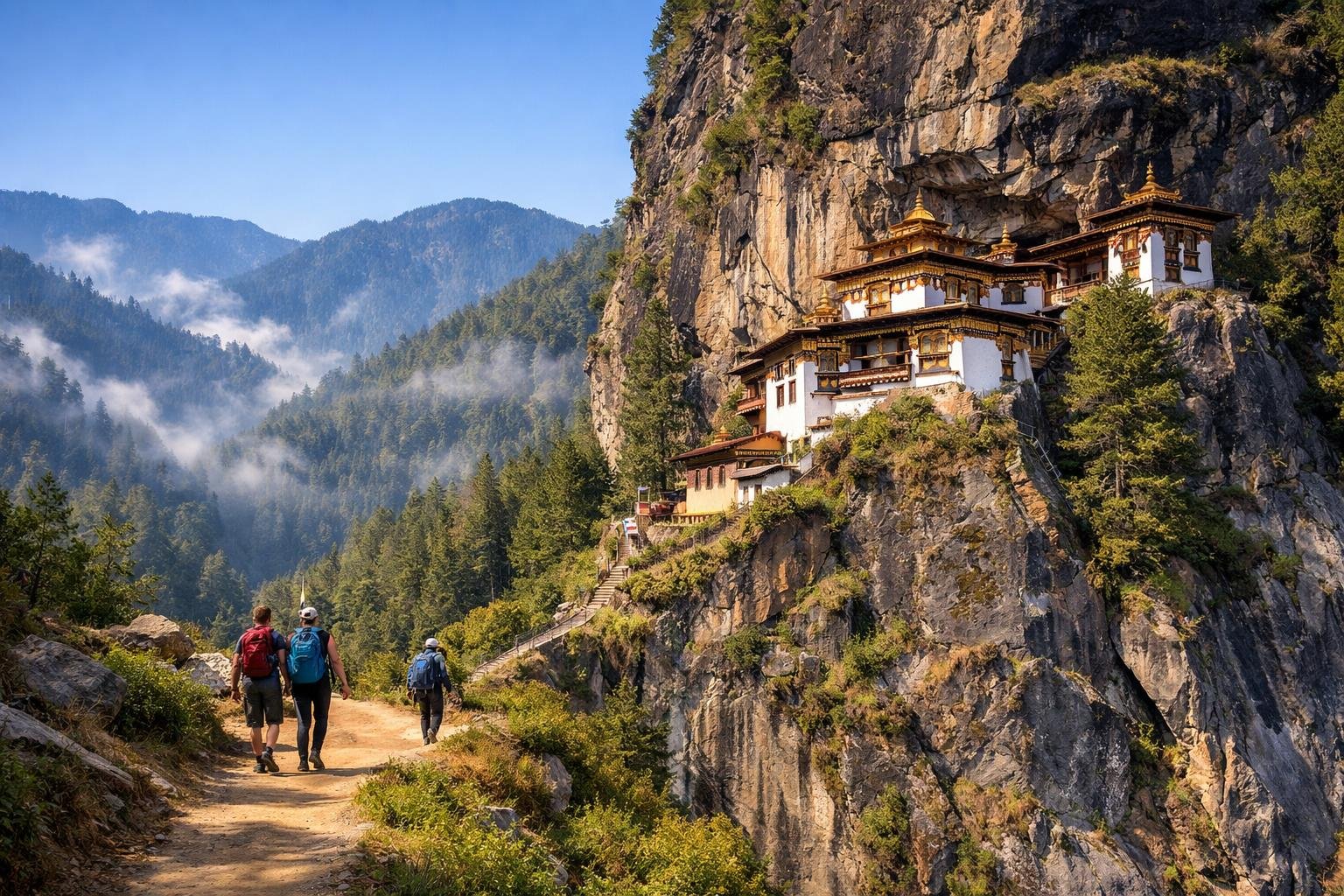
Paro is where you’ll arrive by air. The famous Tiger’s Nest Monastery (Taktsang) sits 900 meters above the valley, clinging to a cliff. The hike up takes a couple of hours through forests and prayer flags. Paro’s also home to old dzongs and farmhouses where you can try a homestay.
Thimphu, the capital, mixes government offices with markets full of handwoven textiles. You can check out the Buddha Dordenma, a huge gold statue overlooking the city, or join locals doing prayer walks at the Memorial Chorten. The weekend market is full of organic veggies, dried chilies, and crafts.
Punakha sits lower, so it’s warmer and perfect for rice fields. Punakha Dzong, at the meeting of two rivers, is one of Bhutan’s most photogenic spots. The valley has easy walks through terraces and over long suspension bridges.
Bumthang covers four valleys in central Bhutan, packed with the country’s oldest temples. Jambay Lhakhang dates back to the 7th century, and you’ll get a taste of rural life in villages growing buckwheat and potatoes. This area is also where Bhutan makes its cheese and honey.
Cultural Heritage: Dzongs, Festivals, and Gross National Happiness
Dzongs serve as both monasteries and government offices. These fortress-like buildings have thick walls, big courtyards, and towers—built without blueprints or nails. Every district has at least one, with monks on one side and officials on the other.
Festivals (tshechus) light up the dzongs each year. Masked dancers tell ancient stories, and locals believe watching them brings blessings. Women wear bright kiras, men don the gho, and everyone comes together for the show.
Gross National Happiness guides how Bhutan develops. The government tracks progress by health, education, culture, and more—not just money. You’ll see this in the old architecture, free healthcare and schools, and strict conservation laws that keep 72% of the country forested.
Bhutan actually absorbs more carbon than it emits. Laws require at least 60% forest cover, and hydroelectric power comes from glacial rivers. Strict tourism rules keep visitor numbers down, and the SDF funds conservation.
Trekking, Cuisine, and Unique Bhutan Experiences
Trekking ranges from easy day hikes to the epic Snowman Trek—25 days over eleven passes above 4,500 meters, through valleys where yak herders still live their traditional way. You can also try the 4-day Druk Path between Paro and Thimphu, or gentler walks in Gangtey valley.
You’ll need a licensed guide and camping gear for all treks. Meals are cooked by trek staff, and you’ll sleep in tents unless you’re on a route with basic lodges. Spring and autumn are best for trekking, but some high passes close in winter.
Bhutanese food is all about chilies and cheese. Ema datshi—green chilies stewed with cheese—is the national dish, usually served with nutty red rice. You’ll find momos (dumplings) stuffed with pork, beef, or veggies everywhere. Phaksha paa is pork belly with chilies and radishes.
The local currency is the ngultrum, pegged to the Indian rupee. Most hotels and restaurants in Thimphu and Paro take credit cards, but you’ll want cash for rural spots and markets. Your tour usually covers three meals a day, but you can always try local restaurants in the cities.
Is Bhutan worth it? With its protected culture, deep environmental focus, and limited tourism, you’ll find experiences you just don’t get anywhere else in the Himalayas. If you can, give yourself at least a week to enjoy Paro, Thimphu, and Punakha without rushing.
Frequently Asked Questions
Traveling to Bhutan means sorting out documents, getting a visa through a licensed tour operator, and following spending minimums that change by season. Most people need a visa in advance, and vaccination rules depend on where you’re coming from and current health advice.
What are the required documents to visit Bhutan?
You’ll need a passport valid for at least six months from your entry date. Your tour operator will sort out your visa clearance before you go.
You’ll get a visa clearance letter to show when you board your flight to Bhutan. If you’re from India, Bangladesh, or the Maldives, you can get your visa on arrival.
Keep copies of your travel insurance, tour confirmation, and return flight tickets handy. Your tour company will tell you if you need anything extra for your specific trip.
Can you explain the daily minimum spending requirement?
The daily minimum package runs $200 per person during the low season (January, February, June, July, and August). In the high season (March, April, May, September, October, and November), it jumps to $250 per person per day.
This package covers your three-star (or better) hotel, all meals, a licensed guide, and ground transportation within Bhutan. It also includes a $65 per day Sustainable Development Fee, which helps fund free education, healthcare, and poverty reduction programs.
If you want to stay somewhere fancier, you can upgrade hotels for an extra charge. Your tour operator sorts all of this out for you.
What is the process for obtaining a visa for Bhutan?
You need to book your trip through a licensed Bhutanese tour operator or one of their international partners. The tour operator handles your visa application and submits it to the Tourism Council of Bhutan.
Visa approval usually takes about 7 to 10 business days. After approval, you’ll get a visa clearance letter by email—keep it handy for your flight check-in to Bhutan.
The visa fee is $40 USD for most international travelers. You pay this when you arrive at Paro International Airport, where immigration officials stamp your passport.
Are there any specific vaccination requirements for traveling to Bhutan?
Bhutan doesn’t require specific vaccines for most visitors. Still, you should double-check the latest health requirements for your country, since rules can change.
Routine shots like measles, mumps, rubella, and tetanus are a good idea. If you’re coming from a country with yellow fever, you’ll need to show proof of yellow fever vaccination.
It’s smart to talk to your doctor or a travel clinic at least a month before your trip. They’ll give advice based on your health and what you plan to do in Bhutan.
How do I arrange a tour guide or travel package for Bhutan?
You have to book through a licensed Bhutanese tour operator—independent travel isn’t allowed. Check the Tourism Council of Bhutan’s official website for a list of operators or connect with their international partners.
Reach out to a few tour operators so you can compare what they offer. Let them know your interests, travel dates, and any special needs, like dietary restrictions or accessibility requirements.
Once you pick an operator, they’ll put together a custom itinerary, handle your visa, book your hotels, assign a guide, and take care of transport. Basically, they cover everything from your arrival to your departure.
What is the best time of year to plan a trip to Bhutan?
Spring (March to May) and autumn (September to November) usually have the best weather—clear skies, comfortable temperatures. If you love trekking or want to see the mountains, these months make it easy to get out and explore.
In spring, rhododendrons and wildflowers burst into bloom all over the valleys. Autumn, on the other hand, brings crisp air, sharp mountain views, and some of the country’s biggest festivals, like Thimphu Tshechu and Paro Tshechu.
Winter (December to February) draws fewer visitors, and hotels often lower their rates, but it gets pretty cold up in the mountains. Summer (June to August) means monsoon rains—sometimes heavy—but the southern valleys stay green and vibrant.